
The Science of Cold: How Temperature Affects Shelf Life
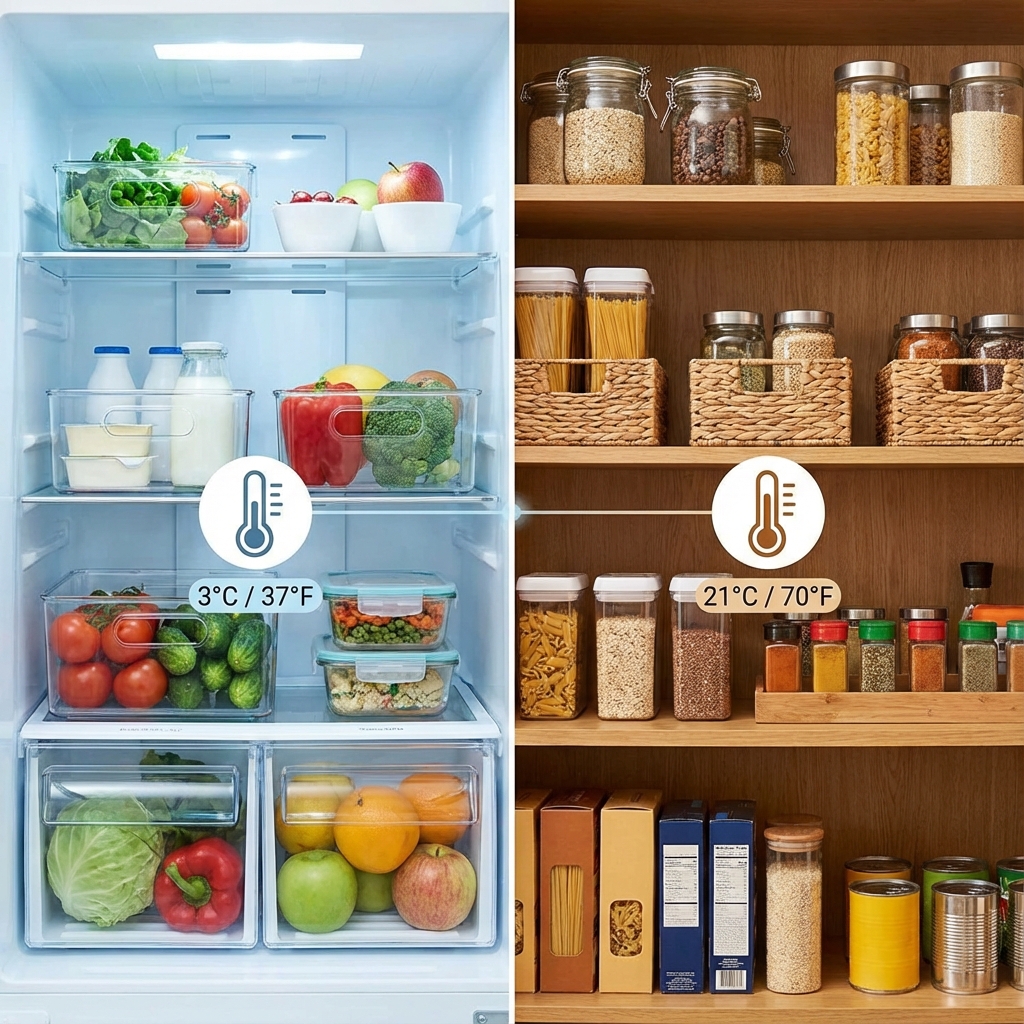
Temperature is the single most important factor in food preservation. A difference of just a few degrees can mean the difference between fresh produce and dangerous spoilage.
The Danger Zone (4°C - 60°C)
Bacteria multiply explosively between 40°F and 140°F (4°C and 60°C). In this "Danger Zone," a single bacterium can become millions in just a few hours.
Arrhenius Equation & Spoilage
Chemical reactions in food follow the Arrhenius relationship. In simple terms for food storage, we use the Q10 Temperature Coefficient.
"For every 10°C (18°F) increase in storage temperature, the rate of chemical reactions doubles."
This means if your pantry is hot (e.g., 30°C instead of 20°C), your canned goods and oils will degrade twice as fast as the label suggests.
Freezing: The Pause Button
Freezing to 0°F (-18°C) inactivates any microbes-bacteria, yeasts, and molds-present in food. However, it does not destroy them. Once thawed, these microbes can become active again.
While food stored constantly at 0°F will always be safe, the quality suffers over time due to freezer burn and enzymatic breakdown. That's why our calculator gives freezer "quality limits" rather than safety limits.